Research, Training and Consultancy in Tanzania
Research support, competence-based training and professional consultancy for students, institutions and organisations. Quality Be the First.
Our name is rooted in the Usambara Mountains of Tanga Region, north-eastern Tanzania. From the early twentieth century, these mountains became a major centre of scientific enquiry. Researchers who came during the colonial period, most notably at the Amani Research Institute established in 1902, studied agriculture, forestry, soils and human health in search of practical solutions to agricultural and health problems. Research has continued there to the present day. We chose the name Usambara to remember this long tradition of problem-solving research and to carry it forward in a modern, ethical and locally grounded way, led by Tanzanians for Tanzania and Africa.
Our team brings together experienced academics and practitioners who understand both the demands of rigorous scholarship and the realities of local institutions. We guide clients through every stage of research, from proposal development to data analysis, reporting and publication, while promoting academic integrity and the responsible use of artificial intelligence.
Guided by our slogan, "Quality Be the First", we work closely with each client to deliver practical, timely, ethical and evidence-based solutions that address social, economic and cultural challenges at national and international levels.
USARETCO is a registered business in the United Republic of Tanzania under the Business Names (Registration) Act (Cap. 213), Registration No. 591326, issued by the Business Registrations and Licensing Agency (BRELA) on 11 December 2024.
Features
Academic Quality Assurance
We provide language editing, proofreading, similarity (plagiarism) checks and AI-content screening for proposals, reports, dissertations and journal manuscripts. Each check comes with a clear report and practical guidance on how to revise the work in your own words. On request, we issue confirmation letters for language editing and similarity checks.
Data Analysis and Statistical Support
We provide professional data analysis for organisations, individuals and researchers in Tanzania and outside Tanzania, including PhD and Master's researchers. Our professional data analysts work with quantitative and qualitative data using recognised software such as SPSS, Stata, R, Python and NVivo, together with modern artificial intelligence tools such as Claude AI, Genspark AI, Skywork AI and other powerful AI platforms. We help you choose suitable methods, test assumptions, present results in clear tables and figures, and interpret the findings so that you understand them fully and can defend them with confidence.
AI Literacy and Responsible AI Training
We run practical, hands-on training for students, lecturers, researchers and professionals on using artificial intelligence tools ethically and productively in research, teaching, administration and self-employment. Courses are delivered face to face, online or in blended mode, and participants receive certificates of completion.
Services
OUR SLOGAN : QUALITY BE THE FIRST

Research Design and Data Services
Professional guidance from proposal to findings: research design, tool development and validation, sampling, ethical fieldwork, transcription and translation, data analysis and accurate data visualisation.
Learn More
Academic Writing and Quality Assurance
We check and strengthen written work before it reaches supervisors, examiners or editors: dissertation and thesis evaluation, academic integrity guidance and professional report writing guidance.
Learn More
Defence and Presentation Preparation
We prepare candidates to present and defend their research with confidence, through presentation training and mock defence panels led by experienced academics.
Learn More
Artificial Intelligence Training
Practical, responsible AI skills for students, graduates, lecturers, professionals and institutions, from ethical use and tool selection to AI in teaching and assessment.
Learn More
Training and Capacity Building
Practical, competence-based training that leaves lasting research skills: data analysis, research assistant preparation, research methods and writing, reference management, supervision and M&E.
Learn More
Consultancy and Publication Guidance
Evidence for organisations that need to make decisions, and guidance for researchers who want to publish: research consultancy, systematic reviews, manuscripts, ethics applications and grant proposals.
Learn More
Language Editing, Plagiarism and AI Services
Language checking, editing and proofreading by professional editors, Turnitin plagiarism tests and reports, AI tests and language clearance letters for PhD and Master's candidates, undergraduates, researchers and organisations.
Learn MoreSTUDENTS SERVICES
USARETCO provides professional academic and research support to PhD, Master's and undergraduate students, as well as other researchers and organisations, in Tanzania and abroad. Our services are delivered by qualified professionals, including doctors who lecture at higher learning institutions.
Our commitment to academic integrity: we support, guide and improve your work, but we do not write proposals, theses, dissertations or assignments on behalf of students. All work submitted for assessment must remain your own. Every document you share with us is treated as strictly confidential and is used only for the service you request.
Our Services
1. Professional Language Check, Editing and Proofreading
Careful review of grammar, spelling, punctuation, academic style, clarity and consistency of proposals, theses, dissertations, journal articles and reports by our professional editors. The ideas, arguments and findings remain entirely your own.
2. Professional Data Analysis
Analysis of quantitative and qualitative data that you have collected, carried out by professional data analysts using recognised software (for example SPSS, STATA, R, NVivo and Excel). Results are presented and explained clearly so that you can interpret, report and defend them with confidence.
3. Transcription and Translation
Accurate transcription of interviews and focus group discussions, and translation between Kiswahili and English, with the confidentiality of participants fully protected.
4. Plagiarism and AI Test
A similarity check using Turnitin and an AI-content check, so that you can see your scores and revise your work before submission.
5. Plagiarism and AI Report
A full, formal similarity and AI-content report suitable for sharing with your supervisor, department or institution.
6. Language Clearance Letter
An official letter confirming that your work has been professionally edited. The letter is issued only after all identified language errors have been corrected.
7. Research Devices
Rental of research devices for data collection, such as AI translators, headphones and slim AI voice recorders, for PhD and Master's students, researchers and organisations.
8. Research Assistant
Trained USARETCO Research Assistants to support data collection in the field and the use of research devices, working under your direction and in line with your ethical approval.
9. Professional Slides (PowerPoint)
Design of clear and professional PowerPoint slides from your own content for proposal defences, viva voce examinations, conferences and seminars.
10. Professional Consultation
One-to-one guidance from experienced doctors and lecturers on research design, methodology, proposal development, data analysis and publication.
How to Request a Service
Complete the form below, choose the service you need and click Submit Service Request. Your request is sent directly to the USARETCO office. We will contact you by email or phone to confirm the cost, delivery time and any documents required before work begins.
Email: info@usaretco.com | usambararesearchtraining@gmail.com | Phone/WhatsApp: +255 655 523679
Team
DR. BENARD ADAM HAMZA (PhD)
Chief Executive Officer
Dr. Benard Adam Hamza is the founder and Chief Executive Officer of USARETCO. He holds a PhD in Education with Artificial Intelligence and is an AI Expert and Certified AI Trainer. He also holds 20 research and artificial intelligence certificates from the United States of America. He has more than eight years of experience as a research consultant and has supervised over fifty research projects and proposals. His expertise covers quantitative, qualitative and mixed-methods research, data analysis and the responsible use of artificial intelligence in education, research and professional practice.
SALOME NELSON MWAFONGO
Chief Operating Officer
Salome Nelson Mwafongo oversees the day-to-day operations of USARETCO. She coordinates training programmes, research support services, device hire and staff deployment, ensuring that every assignment is delivered on time and to the quality standards expected by our clients.
MAGDALENA
Director of Customer Care
Magdalena leads customer care at USARETCO. She is the first point of contact for researchers, students and organisations, and handles enquiries, bookings, device hire requests and follow-up, making sure that every client receives timely, courteous and professional service.
TWAIBU TWABIBU DAMIAN
Director of Research, Training and Consultancy
Twaibu Twabibu Damian leads research, training and consultancy at USARETCO. He oversees research support for PhD, Master's and organisational clients, supervises Research Assistants and the hire of research devices, and ensures that data collection and analysis meet rigorous academic standards.
Contact
- Dar es Salaam, Tanzania
- P.O. Box 76812, Dar es Salaam
 +255-655523679 - Call or WhatsApp
- info@usaretco.com
- Mon-Fri - 08:00AM-07:00PM
Email us at info@usaretco.com or usambararesearchtraining@gmail.com, or call or WhatsApp +255 655 523679.
Training is open to individuals, organisations and groups. Clients may attend sessions at USARETCO, or we can send our trainers to your institution anywhere in Tanzania and abroad. Content, duration, mode of delivery (face-to-face, online or blended) and fees are agreed with each client.
To arrange a programme, choose a course from the list below, click Book Training, complete the short booking form, and our team will contact you to discuss your needs and agree on the terms.
1. Introduction to Artificial Intelligence and Its Applications
2. Information and Communication Technology (ICT)
3. Data Analysis and Interpretation
4. Mental Health and Psychological Support
5. General Capacity Building and Professional Development
6. Monitoring and Evaluation (M&E)
7. Leadership and People Management
8. Project Planning and Management
9. Professional Communication and Report Writing
10. Customer Care and Service Delivery
11. Occupational Health and Safety
12. Cybersecurity and Personal Data Protection
13. Financial Literacy and Personal Financial Management
14. Workplace Ethics, Integrity and Accountability
15. Human Resource Management and Employee Relations
16. Entrepreneurship and Innovation
17. Procurement and Contract Management
18. Research Methods and Evidence-Based Decision-Making
19. Conflict Resolution, Negotiation and Teamwork
20. Gender Equality, Disability Inclusion and Prevention of Workplace Harassment
21. Ethical Use of Artificial Intelligence
22. Artificial Intelligence for Self-Employment and Entrepreneurship
Each programme can be customised in content, duration and delivery mode. Click Book Training below to submit your request.
BOOK TRAINING
Good research depends on good data, and good data depends on the right tools in the hands of well-trained people. USARETCO now offers PhD candidates, Master's students and organisations a complete field research package: modern AI-enabled research devices for hire, certified Research Assistants trained to use them, and professional data analysis before the final document reaches you.
WHAT WE OFFER
- Research device hire. Five field-tested devices for interviews, focus group discussions, surveys, mapping and multilingual work. They are available for short visits or extended fieldwork.
- Trained Research Assistants. You may request a USARETCO Research Assistant to collect data with you or on your behalf. Each assistant is trained on every device before deployment.
- Professional data analysis. Our data analysts clean, code and analyse quantitative and qualitative data. Every output is reviewed internally before it is sent to the individual or organisation.
- Send a request to info@usaretco.com or usambararesearchtraining@gmail.com, or call / WhatsApp +255 655 523679. State your study title, study area, sample size, fieldwork dates and the devices or assistants you need.
- Receive a written quotation confirming availability, duration, fee and any refundable deposit.
- Sign the hire or service agreement and complete payment.
- Collect the devices or meet your Research Assistant. A short orientation on each device is included.
- Return the devices after fieldwork. Data are transferred to you securely and, where requested, passed to our analysts.
- One provider for tools, field staff and analysis, so nothing is lost between stages.
- Research Assistants who are trained, supervised and certified, not hired at random.
- Analysts and trainers who are university lecturers and experienced researchers.
- Strict attention to research ethics, informed consent and data protection.
- Fair, negotiated fees suited to students as well as institutions.
OUR RESEARCH DEVICES
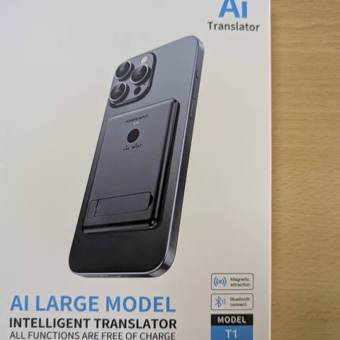
AI TRANSLATOR (MODEL T1)
An AI large-model intelligent translator that attaches magnetically to a smartphone and connects by Bluetooth 5.3. The manufacturer lists support for more than 146 languages, with real-time, face-to-face, phone-call and cross-app translation, as well as meeting translation records. We use it for interviews and focus group discussions where the researcher and respondents do not share a language, and key transcripts are always checked by a fluent speaker.

SLIM AI VOICE RECORDER
A card-thin digital voice recorder designed for AI note-taking. It fits in a wallet or attaches to the back of a phone, so interviews can be recorded unobtrusively once informed consent has been given. Recordings are transferred to its companion app for transcription and summarising, which shortens the time from fieldwork to analysis. It is ideal for in-depth and key informant interviews, classroom observation and recording meetings.
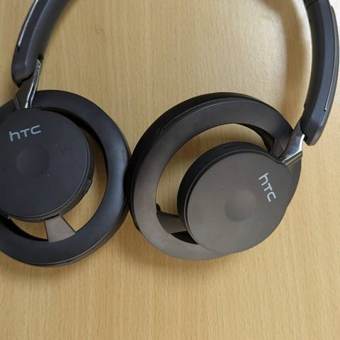
HTC WIRELESS OVER-EAR HEADSET
A Bluetooth over-ear headset with on-ear volume and playback controls. Our transcribers and Research Assistants use it to listen closely to recorded interviews and to conduct clear telephone and online interviews. The closed over-ear design shuts out much of the surrounding noise, which improves transcription accuracy, especially for recordings made in busy markets, schools, offices and health facilities.

DATA COLLECTION TABLETS (CAPI)
Android tablets pre-configured with KoboToolbox and ODK Collect for computer-assisted personal interviewing. Questionnaires work offline, apply skip logic and validation rules, record GPS points and photographs, and upload securely once a network is available. This removes the errors of paper-based data entry and gives the researcher clean, ready-to-analyse data within hours of each interview.
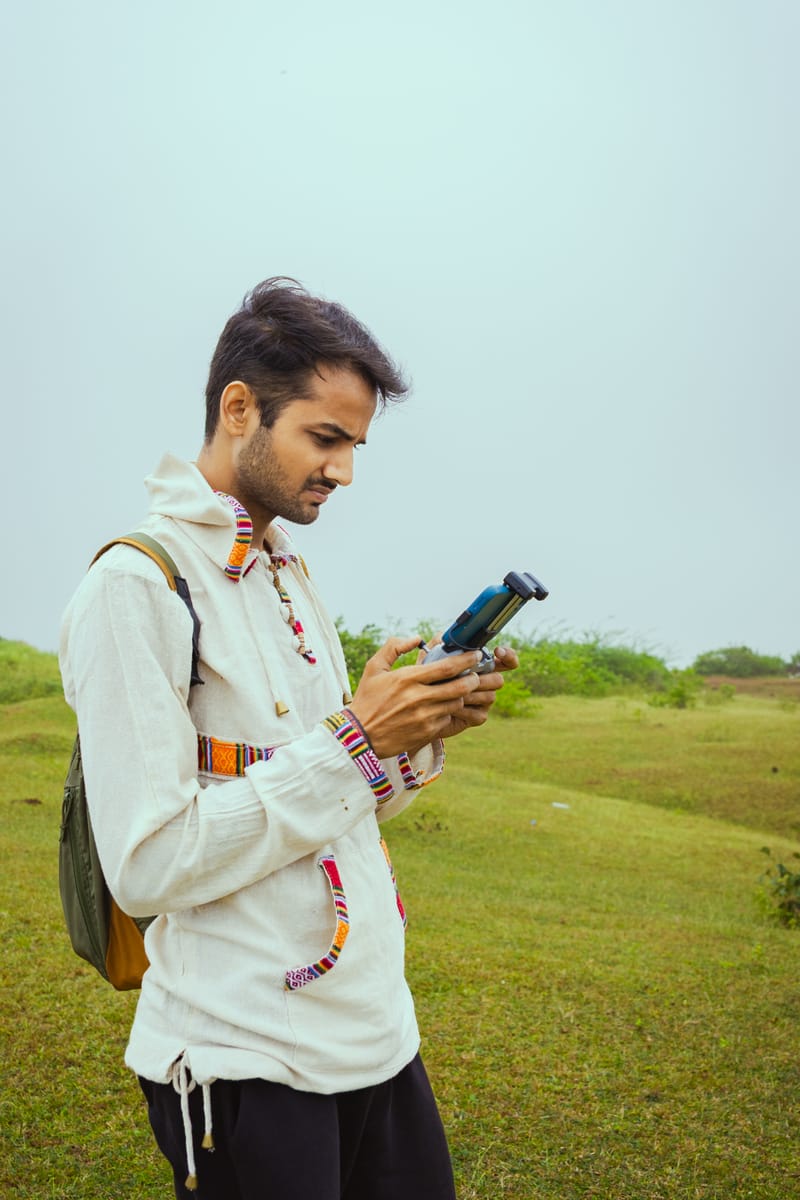
HANDHELD GPS RECEIVER
A rugged handheld GPS unit for recording the precise coordinates of households, schools, health facilities, farms and sampling points, even where mobile network coverage is weak. Waypoints and tracks can be exported for mapping in QGIS or ArcGIS, which makes the device valuable for studies in geography, environment, agriculture, public health, land use and sampling design.
OUR SIX-STEP TRAINING PROCESS
- Foundation in research. Research Assistants first complete the USARETCO Research Assistant online course, which covers research methods, sampling, questionnaire and interview techniques, and research ethics, and leads to a USARETCO Certificate of Participation.
- Device orientation. Trainers introduce each of the five devices: setting up, pairing by Bluetooth, charging, language and recording settings, file naming and safe storage.
- Hands-on practice. Trainees conduct mock interviews and focus group discussions with the AI translator and recorder, build and test digital questionnaires on the tablets, record GPS waypoints, and transcribe practice recordings with the headset.
- Ethics and data protection. Trainees learn to obtain and record informed consent before any recording, to protect respondents' identities, and to handle personal data in line with Tanzania's Personal Data Protection Act, 2022 and the approval conditions of each study.
- Competence check. Each trainee must show, in a supervised practical test, that they can use every device correctly and transfer data securely. Only those who pass are deployed.
- Field supervision and refresher sessions. Our Directorate of Research supervises Research Assistants during fieldwork, checks data quality daily, and runs refresher sessions whenever devices or software are updated.
After data collection, recordings and datasets pass to our professional data analysts, who clean, transcribe, code and analyse them using recognised quantitative and qualitative software. A second analyst reviews every output before the final document is sent to the individual or organisation. Our trainers and analysts are university lecturers and experienced researchers, so the support you receive meets the standard expected of PhD and Master's research.
We warmly invite PhD candidates, Master's students, universities, government institutions, NGOs and private organisations in Tanzania and beyond to work with us.
Twaib Damian
Director of Research, Data Analysis and Consultancy
Usambara Research Training and Consultancy (USARETCO)
P.O. Box 76812, Dar es Salaam, Tanzania
Email: info@usaretco.com | usambararesearchtraining@gmail.com
Phone / WhatsApp: +255 655 523679